The Problem
Sooner or later, a student turns in work that doesn't sound like them: a personal reflection with no personal detail, or a journal entry copied straight from a chatbot. AI detectors are unreliable; their false positives can crush students who did their own work. Ignoring it teaches students that the shortcut works, but a harsh first response can break trust without teaching anything.
The Idea
Treat a first case as a teachable moment with accountability. Look at the writing process rather than a detector score, talk with the student privately, and offer a chance to redo the work in their own words. Explain why the assignment matters, follow your school's policy, and adjust future assignments so the shortcut is less tempting. Cheating isn't new; students have hidden answers for generations. What's new is how easy it is, so the response has to teach.
The Steps
Step 1. Notice and pause: Note what doesn't fit, such as a voice, vocabulary or level of detail unlike the student's other work. Don't accuse yet.
Step 2. Look at the process, not a detector: Open the Google Docs version history; a whole paper arriving in one paste is a strong clue. Compare it with writing the student did in class.
Step 3. Talk privately: Start with what you noticed: "I read your reflection, and it doesn't sound like you. Tell me how you wrote it." Then listen.
Step 4. Offer the rewrite: Have the student redo the work in their own words, on paper or in class where you can see it.
Step 5. Explain why it matters: A reflection is about what you think and how you connect ideas, and AI can't do that for you. In college and at work, the same shortcut can carry serious consequences.
Step 6. Document and follow policy: Record what happened and how it was resolved, and inform administrators or families as your school's policy requires. A repeat follows your school's consequences.
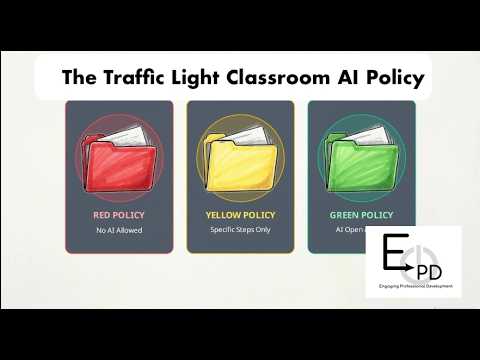
Step 7. Design out the shortcut: For the next assignment, set a clear traffic-light color, build in drafting checkpoints in class, and ask students to acknowledge any AI use.