The Problem
Many students turn to chatbots for advice about friendships, feelings and big decisions. A chatbot is available at any hour, never seems to judge, and agrees with almost everything, so it can start to feel like a friend or a counselor. But it has no feelings, no stake in the student's life and no responsibility for what happens next, and it can validate thoughts that a caring person would question. Students rarely stop to ask whether it deserves that trust.
The Idea
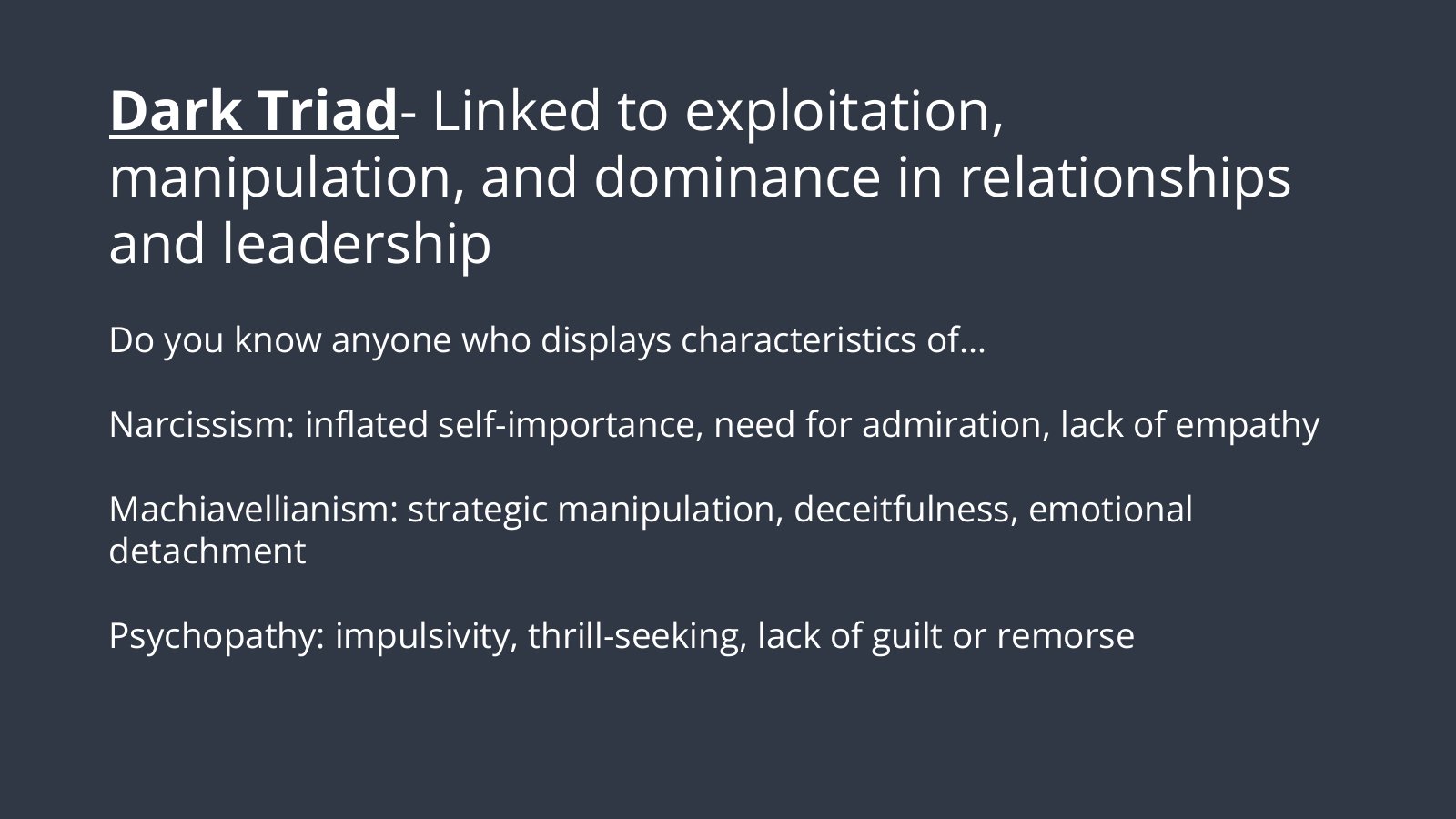
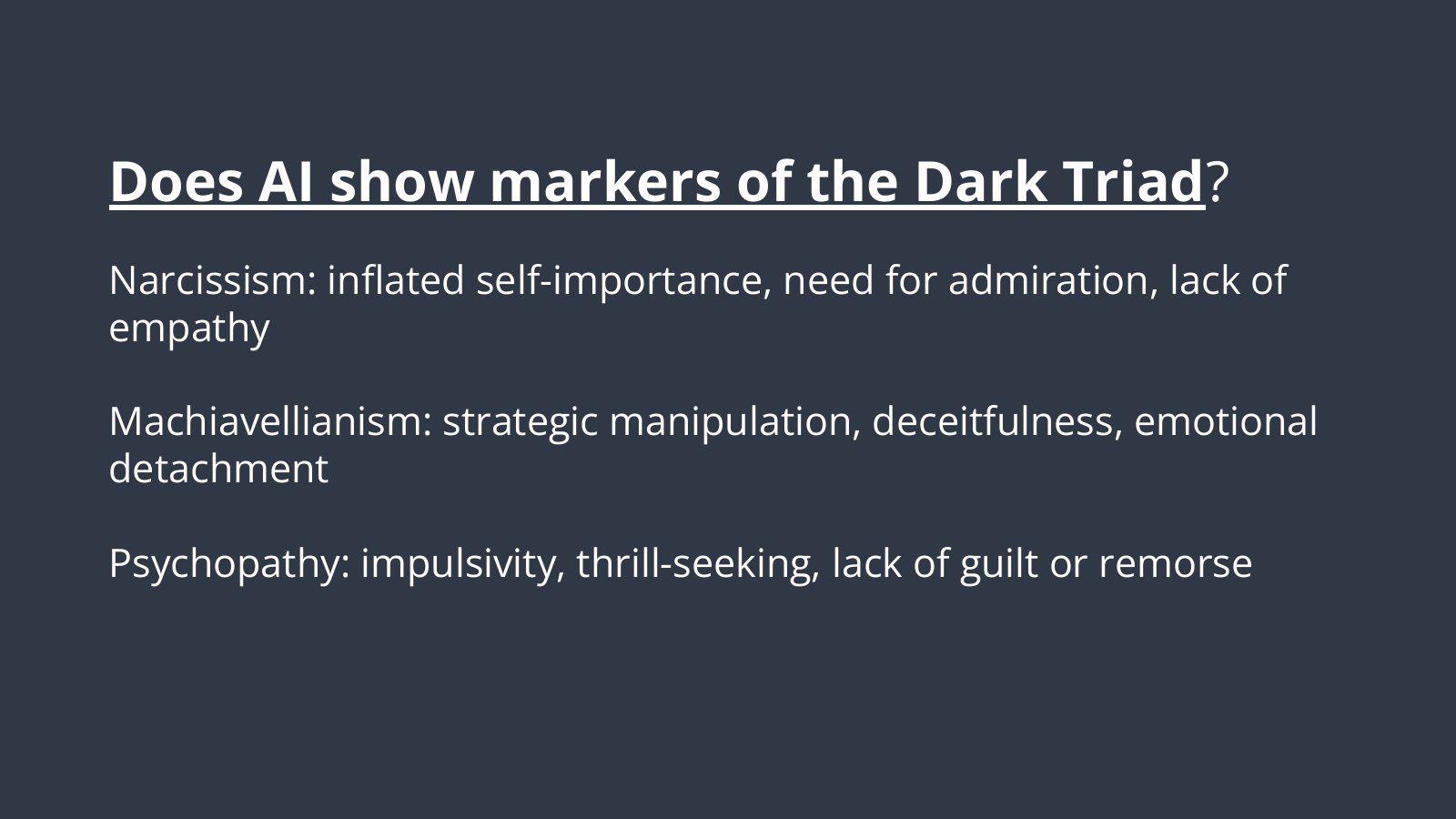
Give students a lens for judging who they take life advice from. Psychologists use the term "Dark Triad" for three traits linked to manipulation and exploitation in relationships: narcissism (inflated self-importance, need for admiration, lack of empathy), Machiavellianism (strategic manipulation, deceitfulness, emotional detachment) and psychopathy (impulsivity, lack of guilt or remorse). Students first decide whether they would take advice from someone with these traits, then test whether a chatbot shows similar markers: it flatters, sounds caring without feeling anything, states false things confidently and carries no guilt for bad advice. The conclusion is not that AI is evil, but that it is not a counselor or a friend. Life advice comes from people who know and care about you.
The Steps
Step 1. Introduce the Dark Triad (Slide 1): Show Slide 1 and read the three traits and their markers together. Ask students to think of characters from books, movies or TV who show them. Keep examples fictional or public.
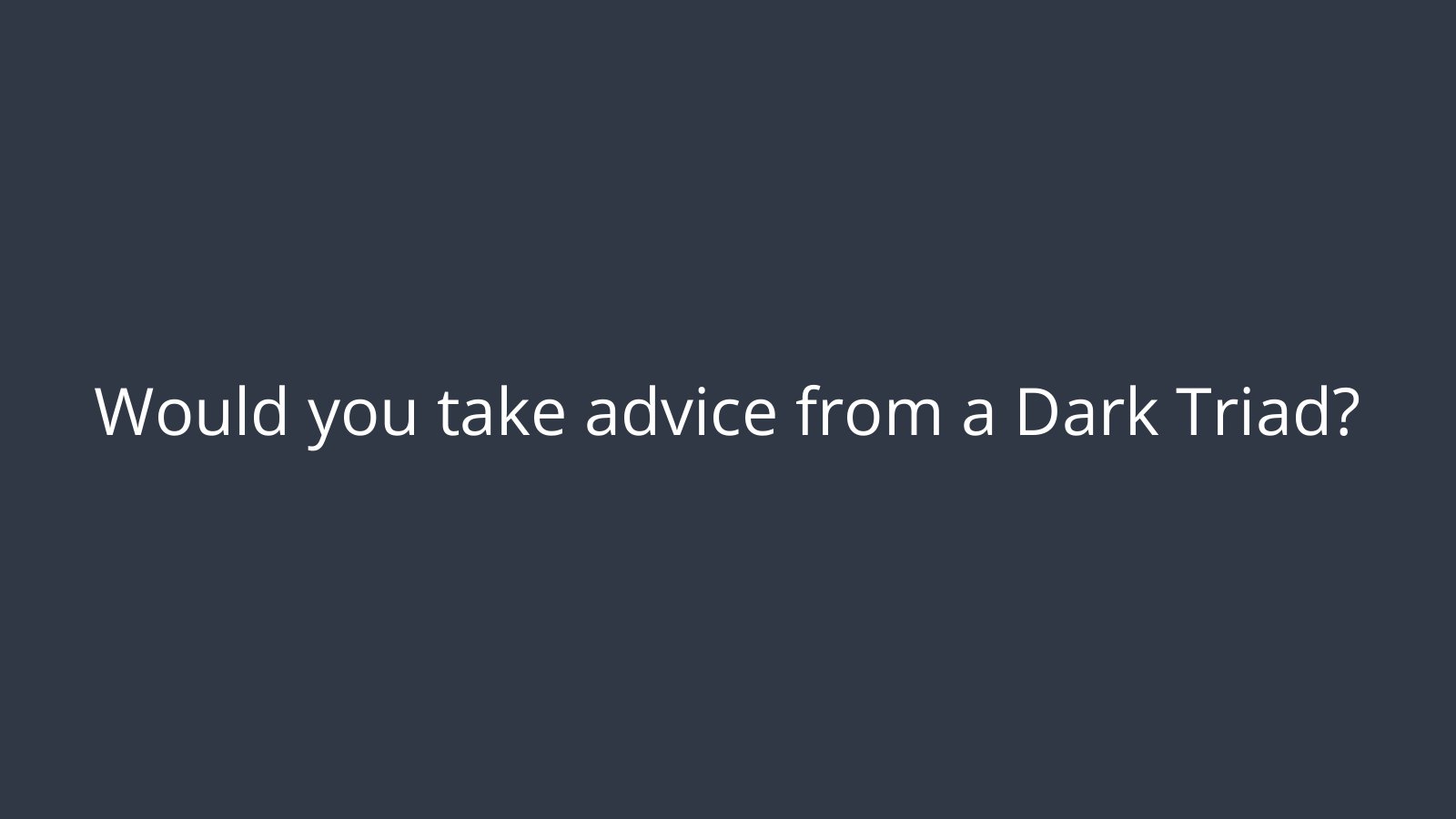
Step 2. Would you take their advice? (Slide 2): Show Slide 2. Turn and talk: would you ask someone with these traits for advice about your life? Why not?
Step 3. Test AI against the traits (Slide 3): Show Slide 3, which lists the same markers. In small groups, students sort examples of chatbot behavior into a two-column chart ("What AI does" and "Which trait it resembles"), such as praising every idea, saying "I understand how you feel," or giving a confident wrong answer. Use teacher-run demos or screenshots, not student accounts.
Step 4. Name the real difference: Discuss: AI isn't cruel or scheming; it has no feelings at all. It can sound caring, but it can't care about you, doesn't know your life and isn't responsible for what happens if its advice is wrong.
Step 5. Map real support: Students privately list two or three trusted people they could go to for life advice. Name the school counselor and your school's support resources, and share the 988 Suicide & Crisis Lifeline (call or text 988 in the U.S.).
Step 6. Write a personal rule: Each student completes: "I'll use AI for ___. For ___, I go to a person."
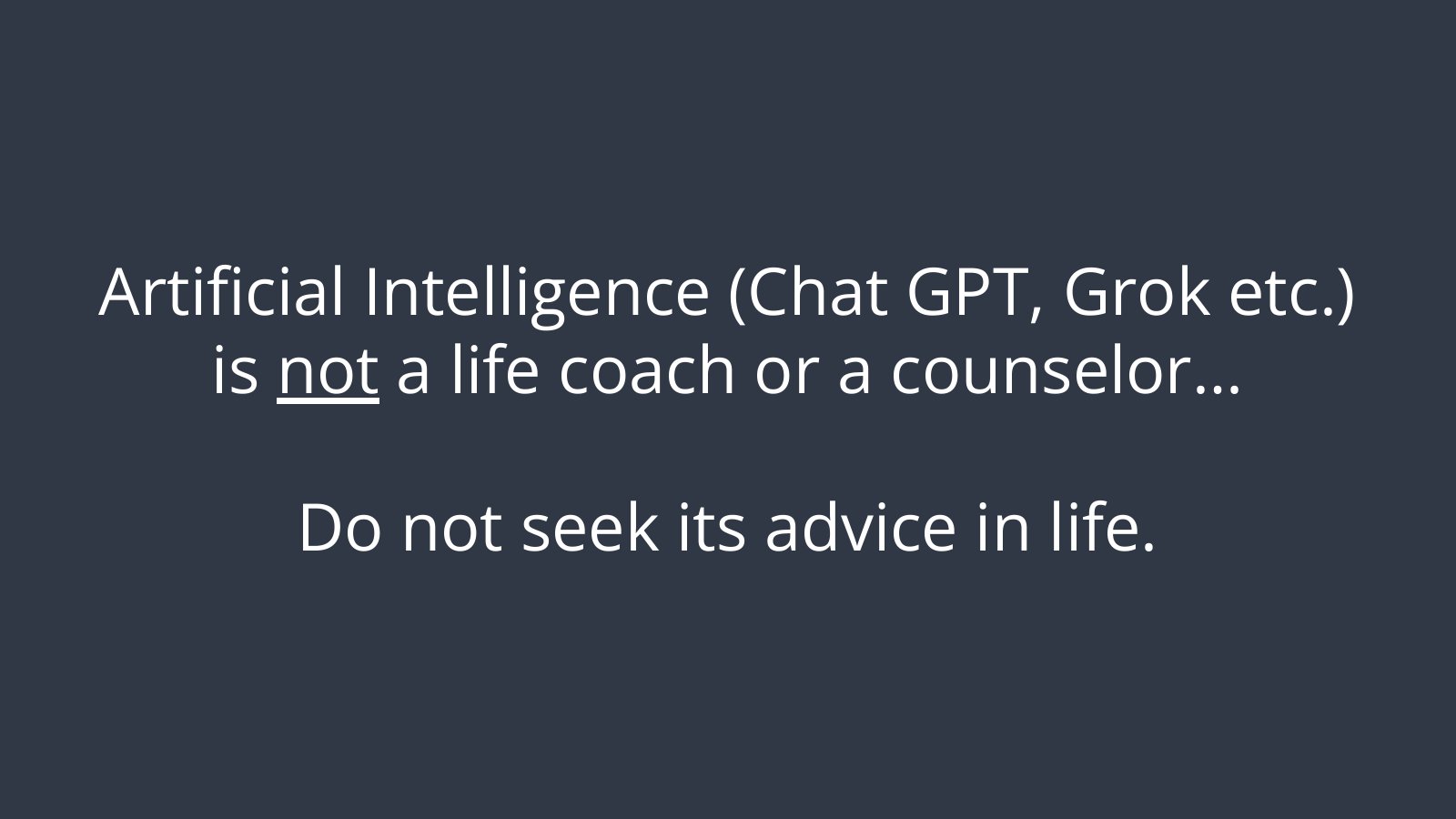
Step 7. Close with the takeaway (Slide 4): Show Slide 4: AI is not a life coach or a counselor. Don't look to it for advice about your life.